







 配送


書 正版 預售 中世紀 英文原版 The Middle Ages 歐洲歷史的詳細資訊
書籍為正版書籍 ,部分絕版書籍,為舊書或者二手書籍,建議咨詢客服
1.書籍均為簡體正版書籍,大陸版社直接寄送。部分絕版書籍為二手二手書籍
2.貨物3天內安排寄送,到貨時間大概8~12天,有時間要求請及時聯繫。
3.圖書因物流運送且多為單冊包裝,偶有碰撞折損潮損,非無法閱讀均不可退貨,完美要求者請切勿下標。
4.大物件商品超過超區規格,需要下標宅配到付哦 。
5.可免費代尋書籍!店鋪每天上新歡迎關注!
6.收到商品有任何問題,歡迎咨詢,感謝~
開 本:128開
紙 張:輕型紙
包 裝:平裝-膠訂
是否套裝:否
國際標準書號ISBN:9780674975361
所屬分類:圖書>英文原版書>人文社科 Non Fiction>History
中世紀 英文原版 The Middle Ages 歐洲歷史
作者:Johannes Fried
譯者:Peter Lewis
平裝: 632 pages
Publisher: Harvard University Press; Reprint edition (26 May 2017)
Language: English
ISBN-
ISBN-13: 9780674975361
Product Dimensions: 15.7 x 4.1 x 23.4 cm
內容簡介
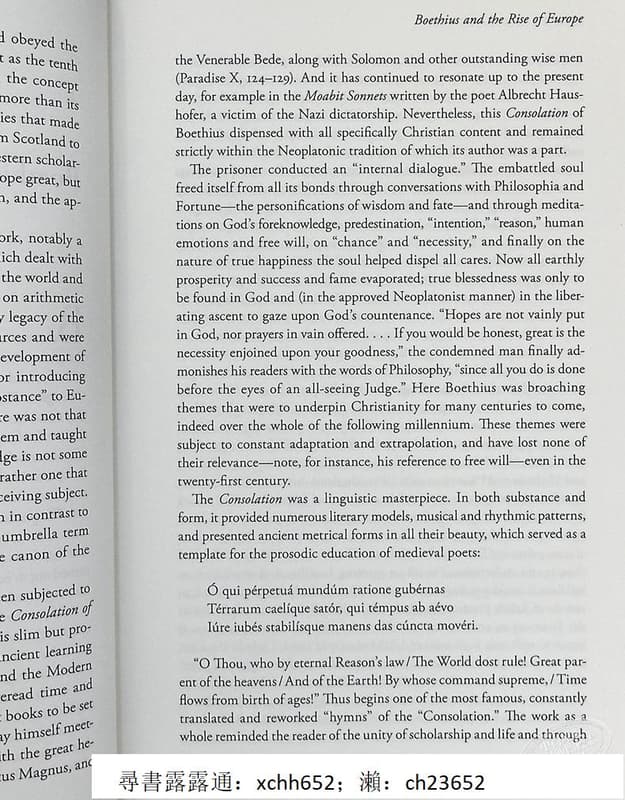
Since the fifteenth century, when humanist writers began to speak of a “middle” period in history linking their time to the ancient world, the nature of the Middle Ages has been widely debated. Across the millennium from 500 to 1500, distinguished historian Johannes Fried describes a dynamic confluence of political, social, religious, economic, and scientific developments that draws a guiding thread through the era: the growth of a culture of reason.
Beginning with the rise of the Franks, Fried uses individuals to introduce key themes, bringing to life those who have too often been reduced to abstractions of the medieval “monk” or “knight.” Milestones encountered in this thousand-year traversal include Europe’s political, cultural, and religious renovation under Charlemagne; the Holy Roman Empire under Charles IV, whose court in Prague was patron to crowning cultural achievements; and the series of conflicts between England and France that made up the Hundred Years’ War and gave to history the enduringly fascinating Joan of Arc.
Broader political and intellectual currents are examined, from the authority of the papacy and impact of the Great Schism, to new theories of monarchy and jurisprudence, to the rise of scholarship and science.
The Middle Ages is full of people encountering the unfamiliar, grappling with new ideas, redefining power, and interacting with different societies. Fried gives readers an era of innovation and turbulence, of continuities and discontinuities, but one above all characterized by the vibrant expansion of knowledge and an understanding of the growing complexity of the world.
媒體推薦
“[An] extraordinary history… ‘Monumental’ is an overused word for historical works, but it may be applicable here. The book has the ambition, scope and, above all, plausibility. There is an enormous amount of ground covered in nearly 600 pages, and with an impressive narrative fluency.”—Nicholas Lezard, The Guardian
“Reads like a counterblast to the hot air of the liberal-humanist interpreters of European history… [Readers] will be impressed by the main body of the work, which covers a thousand years of mostly Western and Central European history with magnificent confidence. [Fried] does justice both to the centrifugal fragmentation of the European region into monarchies, cities, republics, heresies, trade and craft associations, vernacular literatures, and to the persistence of unifying and homogenizing forces: the papacy, the Western Empire, the schools, the friars, the civil lawyers, the bankers, the Crusades… Comprehensive coverage of the whole medieval continent in flux.”—Eric Christiansen, The New York Review of Books
“Fried’s breadth of knowledge is formidable and his passion for the period admirable… Those with a true passion for the Middle Ages will be thrilled by this ambitious defensio.”—Dan Jones, The Sunday Times
“[Fried] gets down to the business of writing excellent history in this absorbing book… Fried covers much in the realm of ideas on monarchy, jurisprudence, arts, chivalry and courtly love, millenarianism and papal power, all of it a rewarding read… The medieval period was, he argues passionately and convincingly, ‘more mature and more wise, more inquisitive, inventive and with a finer feel for art,’ and its people ‘more revolutionary in their deployment of reason and their thinking’ than we give them credit for.”—Sean McGlynn, The Spectator
“This Johannes Fried project is certainly ambitious—condensing 1,000 years of history into a coherent volume is not an easy task. But Fried manages it with aplomb… Encompassing religion, politics, art, literature, social structures and much more besides, the breadth of the book would make it a useful reference for students and amateur scholars.”—Prudence Ivey, Northern Echo
“A sprawling and engaging tome.”—Randy Rosenthal, Tweed’s
“A paean to the modernity of the Middle Ages. Fried is one of the lions of German medieval scholarship of the past generation. His Middle Ages ripple with cultural energy and power. They father the culture of European reason—only to be vilified by Kant and the sons of the Enlightenment.”—Conrad Leyser, Standpoint
“In his masterful book titled simply The Middle Ages, Fried begins with Boethius and wends his way to Machiavelli…telling a tale of political thought and philosophical exploration and most importantly of complexity at every step, a journey through Western Europe’s middle millennium that encourages the reader to think of the period as a truly fruitful period of intellectual, political, and social transformation… Fried shines as an intellectual historian.”—Nathan P. Gimour, Christian Humanist
“Johannes Fried’s The Middle Ages is an absolute must read for anybody with an interest in the Middle Ages.”—Ignas, Kalpokas, LSE Review of Books
“[Fried’s] erudite study traces our evolution towards reason, worldwide exploration,and rational procedures to a dynamic medieval period. This is the springboard to the modern era, as innovation won out against stagnation.”—John L. Murphy, PopMatters
“This beautifully written and well-translated overview of the period between 500 and 1500 C.E. examines concepts and perceptions rather than kings and battles. Fried, professor of medieval history at the University of Frankfurt, begins with Boethius, whose work bridged classical and late antiquity. The development of new attitudes toward liberty and the beginnings of the division between church and state are described with a lucidity that is rare in historical overviews. Fried considers Jews, Muslims, and women as integral parts of society. He also addresses the development of natural science in the 13th century, noting that its monastic adherents had no problem with trying to discover how God’s creation worked. The politics of absolutism are presented in the context of the nature of governance and the rise of the power of commerce. As Fried reaches the plague years of the 14th and 15th centuries and the Renaissance, he analyzes the ‘eruption of the supernatural into the real world’ through new modes in art and the rise of witch hunts. Fried’s conclusion that the ‘Middle Ages…crossed seamlessly over into a similarly constituted Early Modern period’ is aimed at dispelling the myth of a ‘dark’ age between antiquity and modernity.”—Publishers Weekly
“Thanks to what German medieval scholar Fried calls the cultural prejudices of such Enlightenment thinkers as Immanuel Kant, the Middle Ages got a bad rap as a ‘childish and grotesque’ era when, in reality, it was a period of enormous learning, democratization and secularization… Overall, the Middle Ages brought freedom, Fried argues in this passionate but intensely scholarly book (translated from the German), and the desire to know the wider world.”—Kirkus Reviews
“Written by one of the most original historians of his generation, this survey of western European medieval history covers the dec Rome to the eve of the Reformation with verve and intelligence. Fried argues that modernity and the Enlightenment, despite having forgotten their debts to the Middle Ages, actually owe to the period their most valued characteristics: rationality, method, empiricism, doubt, modern science, global interests, citizenship, and last but not least, freedom.”—Philippe Buc, University of Vienna
作者簡介
Johannes Fried was, until his retirement, Professor of Medieval History at the University of Frankfurt.
商品備註・物品狀況:全新・最新關注時間:2025-08-04


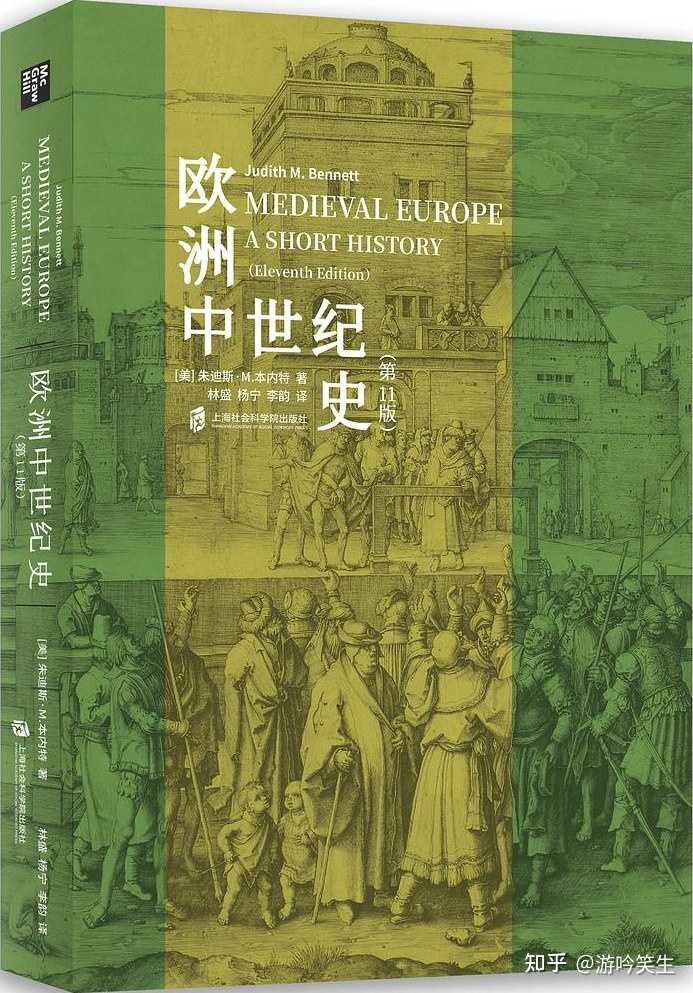
![中世紀歐洲(精)]| 一本My Book One](https://nrapp-prd.oss-cn-hongkong.aliyuncs.com/perm/product/20230216/MTY3NjQ0NTg1MDc4NV9VbnRpdGxlZC5qcGc.jpg?x-oss-process=image/resize,w_500 "中世紀歐洲(精)]| 一本My Book One")







暢銷商品排行榜





查看此商品的人也看了以下商品
-
 我的商店庫存: 114含稅963元
-
 我的商店庫存: 333含稅6188元
-
 我的商店庫存: 252含稅1397元
-
 我的商店庫存: 392含稅5250元
-
 我的商店庫存: 170含稅15281元
附近賣場的商品





顧客評論
推薦度 4.4分
目前有 185則評論。