







 配送


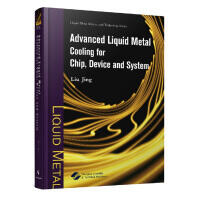
面向芯片、器件與系統的先進液態金屬冷卻 劉靜 9787547845325 【台灣高教簡體書】 的詳細資訊
印行年月:202001*若逾兩年請先於露露通洽詢存貨情況,謝謝。台灣(台北市)在地出版社,每筆交易均開具統一發票,祝您中獎最高1000萬元。書籍所在地若為中國大陸均為代購商品,完成訂單後正常情形下約兩周可抵台。書名:面向芯片、器件與系統的先進液態金屬冷卻ISBN:9787547845325出版社:上海科學技術著編譯者:劉靜叢書名:液態金屬物質科學與技術研究叢書頁數:660所在地:中國大陸書號:1147988大量預訂請先連絡內容簡介隨著微納電子技術的飛速發展,高集成度晶元、光電器件與系統等引發的熱障問題,已成為制約其可持續發展的關鍵瓶頸。這種發展瓶頸對先進散熱技術提出了****的要求。在這種背景下,本書作者於2001年前後首次在晶元冷卻領域引入具有通用性的液態金屬散熱技術,隨後在國內外引發重大反響和後續大量研究,成為近年來該領域內前沿熱點和極具應用前景的重大發展方向之一。影響範圍甚廣,正為能源、電子信息、先進位造、國防軍事等領域的發展帶來顛覆性變革,並將催生出一系列戰略性新興產業。 為推動這一新興學科領域的可持續健康發展,本書作者將其十七八年的研究成果系統梳理和總結,編撰成本專著。本書系統圍繞液態金屬散熱技術,集中闡述了其中涉及的新方法、新原理與典型應用,基本涵蓋了液態金屬晶元散熱領域中的所有重大主題,包括:液態金屬的基礎熱物理特性、流動特性、材料相容性、驅動方法、傳熱特性、微通道散熱技術、相變熱控技術以及一些實際器件的應用等方面,學科領域跨度大,內容嶄新,系國內外該領域首部著作,是一本兼具理論學術意義和實際參考價值的學術著作。以英文版推出,是為了更好地將中國原創科研成果推向國際,因此,具有非常及時和重要的出版價值。作者簡介清華大學醫學院生物醫學工程系教授,中國科學院理化技術研究所研究員。先後入選中國科學院及清華大學百人計劃,國家傑出青年科學基金獲得者。長期從事液態金屬、生物醫學工程與工程熱物理等領域交叉科學問題研究並作出系列開創性貢獻。發現液態金屬諸多全新科學現象、基礎效應和變革性應用途徑,開闢了液態金屬在生物醫療、柔性機器人、印刷電子、3D列印、先進能源以及晶元冷卻等領域突破性應用,成果在世界範圍產生廣泛影響出版14部跨學科前沿著作及20篇應邀著作章節;發表期刊論文480餘篇(20餘篇英文封面或封底故事);申報發明專利200餘項,已獲授權130餘項。曾獲國際傳熱界Z高獎之一「The William Begell Medal」、全國首屆創新爭先獎、中國製冷學會技術發明一等獎、ASME會刊Journal of Electronic Packaging年度V一Z佳論文獎、入圍及入選「兩院院士評選中國十大科技進展新聞」各1次,入選CCTV 2015年度十大科技創新人物等。目錄Chapter 1Introduction11.1Increasing Challenges in Advanced Cooling21.2Water Cooling and New Alternatives41.3Basic Features of Conventional Heat Exchangers61.3.1Heat Exchanger Classification「本資訊為 台灣高等教育出版 社露 天賣 場所有,請前往本社賣場訂購,商用複製必究。」 by Geometry andStructure71.3.2Heat Exchange Enhancement Techniques121.4Limitations of Water?based Heat Exchanger131.4.1Overall Properties of Water131.4.2Adhesion and Cohesion141.4.3Surface Tension141.4.4Specific Heat141.4.5Conductivity151.5Liquid Metal Coolant for Chip Cooling151.6Some Facts about Liquid Metal171.7Revisit of Traditional Liquid Metal Cooling191.8Liquid Metal Enabled Innovation on ConventionalHeat Exchanger221.9Potential Application Areas of Liquid Metal ThermalManagement 231.9.1Chip Cooling231.9.2Heat Recovery251.9.3Energy System271.9.4Heat Transfer Process Engineering281.9.5Aerospace Exploration281.9.6Appliances in Large Power Systems291.9.7Thermal Interface Material291.9.8More New Conceptual Applications311.10Technical and Scientific Challenges in Liquid MetalHeat Transfer 321.11Conclusion35References36Chapter 2Typical Liquid Metal Medium and Properties for AdvancedCooling442.1Typical Properties of Liquid Metals452.1.1Low Melting Point452.1.2Thermal Conductivity452.1.3Surface Tension482.1.4Heat Capacity492.1.5Boiling Temperature502.1.6Sub?cooling Point502.1.7Viscosity512.1.8Electrical Properties522.1.9Magnetic Properties522.1.10Chemical Properties522.2Alloy Candidates with Low Melting Point532.2.1Overview532.2.2GaIn Alloy532.2.3NaK Alloy552.2.4Wood?s Metal552.3Nano Liquid Metal as More Conductive Coolant or Grease552.3.1Technical Concept of Nano Liquid Metal552.3.2Performance of Typical Nano Liquid Metals562.4Liquid Metal Genome towards New Material Discovery612.4.1About Liquid Metal Material Genome612.4.2Urgent Needs on New Liquid Metals622.4.3Category of Room Temperature Liquid Metal Genome622.5Fundamental Routes toward Finding New Liquid Metal Materials642.5.1Alloying Strategy from Single Metal Element642.5.2Making Composite from Binary Liquid Alloys652.5.3Realizing Composite from Multicomponent Liquid Alloys662.5.4Nano Technological Strategies662.5.5Additional Physical Approaches662.5.6Chemical Strategies672.6Fundamental Theories for Material Discovery682.6.1Calculation of Phase Diagram (CALPHAD)682.6.2First Principle Prediction692.6.3Molecular Dynamics Simulation692.6.4Other Theoretical Methods702.7Experimental Ways for Material Discovery702.8Theoretical and Technical Challenges712.9Conclusion73References73Chapter 3Fabrications and Characterizations of Liquid Metal CoolingMaterials803.1Preparation Methods813.1.1Alloying813.1.2Oxidizing813.1.3Fabrication of Liquid Metal Droplets823.1.4Preparation of Liquid Metal Nano Particles833.1.5Coating of Liquid Metal Surface843.1.6Loading with Nano Materials863.1.7Compositing with Other Materials873.2Characterizations of Functional Liquid Metal Materials873.2.1Regulation of Thermal Properties883.2.2Regulation of Electrical Properties883.2.3Regulation of Magnetic Properties893.2.4Regulation of Fluidic Properties893.2.5Regulation of Chemical Properties893.3Liquid Metal as Energy Harvesting or Conversion Medium903.4Low Temperature Liquid Metal Used in Harsh Environment913.4.1Working of Liquid Metal under Cryogenic Situation913.4.2Basics about Cryogenic Cooling923.5Potential Metal Candidates with Melting Point below ZeroCentigrade 94.................................................................................Flow48711.4.3Convection Coefficient under Different Coolant VolumeFlow48811.4.4Thermal Resistance under Different Pump Power48911.4.5Flow Pattern Discrimination49011.4.6Flow Resistance Comparison49111.4.7Convective Heat Transfer Coefficient Comparison49211.4.8Other Flowing Issues49311.4.9Liquid Metal Alloy?based Mini Channel HeatExchanger49411.5Hybrid Mini/micro Channel Heat Sink Based on Liquid Metal andWater49411.5.1Hybrid Mini/micro Channel Heat Sink49511.5.2Materials49611.5.3Test Platform49711.5.4Cooling Capability Comparison with Pure Water CoolingSystem 49811.6Flow and Thermal Modeling and Optimization of Micro/mini Channel Heat Sink50211.6.1About Micro/mini Channel Heat Sink50211.6.2Flow and Thermal Model50311.6.3Optimization of Micro/mini Channel Heat Sink50511.6.4Micro Channel Water Cooling50511.6.5Channel Aspect Ratio50611.6.6Channel Number and Width Ratio50711.6.7Velocity50811.6.8Base Thickness50911.6.9Structural Material51011.6.10Mini Channel Liquid Metal Cooling51011.6.11Mini Channel Water Cooling51311.7Conclusion514References515Chapter 12Hybrid Cooling via Liquid Metal and Aqueous Solution51712.1Electrically Driven Hybrid Cooling via Liquid Metal andAqueous Solution51812.1.1Coolants and Driving Strategy51812.1.2System Designing51912.1.3Continuous Actuation of Liquid Metal Sphere?s CircularMotion 51912.1.4Heat Transfer Performance52012.1.5Thermal Resistance Components52112.1.6Heat Transfer Capacity under Different Driving Voltages52212.1.7Electrical Driving of Liquid Metal Droplet52312.1.8Liquid Metal Droplet?s Periodic Circular Motion inDifferent Conditions 52412.1.9More Potential Coolants with Improved Performances52512.2Alternating Electric Field Actuated Liquid Metal Cooling52612.2.1Liquid Metal as Water Driving Pump52612.2.2Performance of the Liquid Metal Droplet Driven Flow52712.3Self?driving Thermo?pneumatic Liquid Metal Cooling orEnergy Harvesting53512.3.1Hybrid Coolants towards Automatic Heating Driving53512.3.2Running of Thermo?pneumatic Liquid Metal EnergyHarvester53612.4Hybrid Liquid Metal?water Cooling System for Heat Dissipation54112.4.1Combined Liquid Metal Heat Transport and WaterCooling54112.4.2Working Performances of Combined Liquid Metal andWater Cooling54212.4.3Theoretical Analysis on Combined Liquid Metal andWater Cooling54712.5Electromagnetic Driving Rotation of Hybrid Liquid Metal andSolution Pool55112.5.1Electromagnetic Driving Rotation of Hybrid Fluids55112.5.2Rotational Motion of Liquid Metal in ElectromagneticField55212.5.3Controlling the Rotating Motion of Liquid Metal Pool55512.5.4Liquid Metal Patterns Induced by Electric CapillaryForce55912.6Dynamic Interactions of Leidenfrost Droplets on Liquid MetalSurface56612.7Conclusion574References575Chapter 13Liquid Metal for the Harvesting of Heat and Energy57713.1Direct Harvesting of Solar Thermal Power or Low?grade Heat58013.2Liquid Metal?based Thermoelectric Generation58113.3Thermionic Technology58713.4Liquid Metal?based MHD Power Generation58913.5Alkali Metal?based Thermoelectric Conversion Technology59013.6Direct Solar Thermoelectric Power Generation59113.7Liquid Metal Cooled Photovoltaic Cell59613.7.1Thermal Management for Optical Concentration SolarCells59613.7.2Experimental System59713.7.3Performance Evaluation59813.7.4Theoretical Evaluation on Thermal Resistance60113.8Solar Thermionic Power Generation60513.9MHD and AMTEC Technology60913.10Cascade System61213.11Remarks and Future Developments61413.12Harvesting Heat to Generate Electricity via Liquid MetalThermosyphon Effect61613.13Liquid Metal Thermal Joint61913.14Conclusion626References626Chapter 14Combinatorial Liquid Metal Heat Transfer towards ExtremeCooling63014.1Proposition of Combinatorial Liquid Metal Heat Transfer63014.2Basic Cooling System63314.2.1Abstract Division of A Cooling System63314.2.2Heat Acquisition Segment63514.2.3Heat Rejection Segment63714.2.4Heat Transport Segment63714.3LMPM PCM Combined Cooling System63914.3.1LMPM PCM Cooling63914.3.2LMPM PCM Against Thermal Shock64214.4Liquid Metal Convection?based Cooling Systems64214.5All Liquid Metal Combined Cooling System64514.6Other Alternative Combinations64514.7Conclusion646References647Appendix653Index656前言/序言The last two decades witness an explosive growth of personal computers,communication systems and workstations in the microelectronic industry. Meanwhile,the chip integration density is approaching its limit due to「thermal barrier」encountered. As is well known, overheating of a computer chip would result in shortened life, malfunction, low reliability and failure of work. Therefore, removal of the large amount of heat generated in the electronic components remains a big challenge facing modern system designers and thermal management engineers. However, most of the currently available advanced thermal management techniques are not sufficient enough to cope with the ever increasing devices power density like 100~1?000 W/cm2 and the more compact package technology.So far, tremendous efforts have been made to find out alternative methods for cooling the high power processors. Compared with the widely adopted air cooling,water cooling appears much efficient at drawing heat away from the processor and is therefore gradually becoming a major theme in developing new generation chip cooling device. With the forced convective flow of water, an improvement in heat transfer capacity over air cooling has been found to be more than a factor of 10. However,such method also implies its limitations. The small thermal conductivity of water may lower its effectiveness as a cooling fluid. Therefore,researchers are considering enhance the convective heat transfer effect of water by adding certain conductive nano particles such as copper or aluminum into the solution suspension. But improvement of the solutions heat conductivity through this way is still somewhat limited due to technical restrictions like particle oxygenation,susceptibility to fouling,particle deposition or conglomeration, degeneration of solution quality and flow jamming over the channels etc.Realizing that a group of metals with an extremely low melting point such as gallium or its alloy have a far much larger thermal conductivity than that of the traditional coolant,at the year around 2000~2002,I came up to an idea to adopt such mediums as the cooling fluids for the thermal management of computer chip. A series of theoretical and experimental investigations have therefore been continuously carried out in my lab since then,aiming to develop the new generation liquid metal cooling category. As is now clear that,compared to the conventional heat transfer fluids,liquid metals with low melting point are rather desirable for thermal management of high power density devices owing to their large thermal conductivity and electrical conductivity,low vapor pressure,low dissolution in water and extensive temperature range over which they remain in the liquid phase. Particularly,liquid metal coolants can be pumped efficiently with compact magneto fluid dynamic(MFD)pumps,which are characterized by silent, vibration free,and low energy consumption rates because of the absence of moving components. Liquid metals can even realize high efficiency self driving through its thermosyphon effect and will offer better cooling capability than that of water under the same situations.One thing worth of particularly pointing out is that,the normal boiling points of liquid metals are generally high,and hence the liquid metal cooling systems can be operated at near atmospheric pressures,and liquid metals can remain in liquid state at higher temperature compared to conventional fluids like water and various organic coolants which makes the design of a compact heat exchanger feasible. For example,the most classical liquid metal such as gallium has much higher evaporation point than that of water(2204.8℃ for gallium,and 100℃for water). Therefore,it can remain in a single liquid phase within a wide temperature range. This makes it possible to break up the restriction of the critical heat flux and thus effectively prevent devices from burning out. The key advantages of using liquid metals as the coolant lie in that they do not require operation at high pressure in order to obtain high temperatures and usually, the melting temperatures are low enough such that they can be used as coolants in thermal devices. As a result,their running usually involves pressure which is small compared to thermodynamic critical pressure of the fluid.Among various kinds of liquid metals,mercury has been used in some earlier versions of fast breeder reactors. It was ever adopted as a thermal working fluid in macroscale systems for many years, before its dangers were well understood. Besides, sodium and potassium are also very good cooling fluids, and NaK (sodium?potassium) alloy has been widely used in fast breeder reactors. Sodium is a normal coolant used in large power stations,and both lead and NaK have been used successfully for smaller generating rigs. However,they are quite reactive to air and water,and are therefore considered fire hazards.Unlike the above two,gallium and its alloys including those composed from bismuth and its alloy have been proven to be perfect working fluids or medium for room temperature appliances especially computer chip,LED lamp etc. It owns a high specific heat capacity per unit volume,a low vapor pressure at room temperature,a less reactive nature when exposed to oxygen and water,and a high surface tension which impedes leakage. And these features warrant the future applications of gallium in the thermal management of high heat flux density area. Gallium forms alloys characterized by specific properties with the majority of metals and metalloids. Many of the gallium based alloys are low melting. The physical and mechanical properties of some metals can be enhanced when seeded with gallium. Gallium based alloys mainly consist of gallium, indium,and tin,or two of the three types. Overall,gallium and its alloys are endowed with low toxicity and low reactivity. Therefore,they are quickly adopted as a replacement for many applications that previously employed toxic liquid mercury or reactive NaK. Further,liquid metal with low melting point, as a new generation heat transfer medium,can be easily enhanced on its conductivity through loading with more conductive nano particles. With an extremely high conductivity however relatively small viscosity,such liquid metal could serve as an idealistic base solution or thermal interface medium which shows very promising future for the thermal management application in super CPU chip cooling or the situations requesting seriously high heat flux removal.So far, systematic knowledge about the flow and heat transfer in room temperature liquid metal is rather limited which is however extremely important for future practices. To push forward further researches and possible applications along this important frontier,This book is dedicated to summarize the latest science and art of the liquid metal cooling as advanced over the past few years. The author would like to point out that, although the research related to the utilization of liquid metals as heat transfer media has begun since nearly half a century ago,technological interests derive mainly from the potential use of liquid metals as working fluids in the nuclear reactors. Within an extremely long period of time,researches basically are limited to those specific liquids like sodium,potassium or their alloy,and mercury,which have either high melting temperature or are just toxic and dangerous. Extensively applying the room temperature liquid metals especially gallium, bismuth and their alloy as the new coolant and heat transfer medium for the thermal management of computer chip have been unfortunately overlooked until the beginning of this century. With tremendous efforts and continuous researches ever made subsequently,it is now very clear that,the heat transfer enhancement by liquid metals,as a newly emerging technology in the electronic and various high heat flux fields, offers many brand new scientific and technical opportunities worth of pursuing in the coming time.This book is an output of our labs more than 16 years』continuous academic endeavours. Over the past few years, a group of our faculties, post doctorial research fellows, graduate students and collaborators have made important contributions to mould this new area of liquid metal advanced cooling. The author would like to take this chance to express his sincere appreciations to those people who have offered their professional contribution: Dr. Ma Kunquan, Dr. Deng Yueguang, Dr. Gao Yunxia, Dr. Tang Jianbo, Dr. Wang Lei, Dr. Tan Sicong, Dr. Li Haiyan, Mr. Yang Xiaohu, Mr. Ge Haoshan, Mr. Mei Shengfu, Mr. Li Peipei, Mr. Xie Kaiwang, Mr. Li Teng, Prof. Deng Zhongshan and Prof. Zhou Yixin. Further, Dr. Sheng Lei offers very helpful assistance in gathering all the copyright permissions contained in this manuscript. Lastly but not least,I would like to also acknowledge the generous support from the Special Foundation of President of the Chinese Academy of Sciences,Frontier Project of the Chinese Academy of Sciences as well as the National Natural Science Foundation of China.I hope that this book could serve as start for the academics and industries to quickly grasp the basics of the liquid metal cooling and thus better advance the related areas. I would also very much welcome any critical comments and constructive suggestions from the readers for me to further enhance this book which would be incorporated into its future possible updated version.Liu JingOctober,2018詳細資料或其他書籍請至台灣高等教育出版社查詢,查後請於露天露露通告知ISBN或書號,我們即於露天上架。商品備註・物品狀況:全新・最新關注時間:2025-06-10
暢銷商品排行榜





查看此商品的人也看了以下商品
-
 我的商店庫存: 258含稅4621元
-
 我的商店庫存: 455含稅3850元
-
 我的商店庫存: 404含稅6860元
-
 我的商店庫存: 352含稅18088元
-
 我的商店庫存: 334含稅2004元
附近賣場的商品



顧客評論
推薦度 5分
目前有 199則評論。