
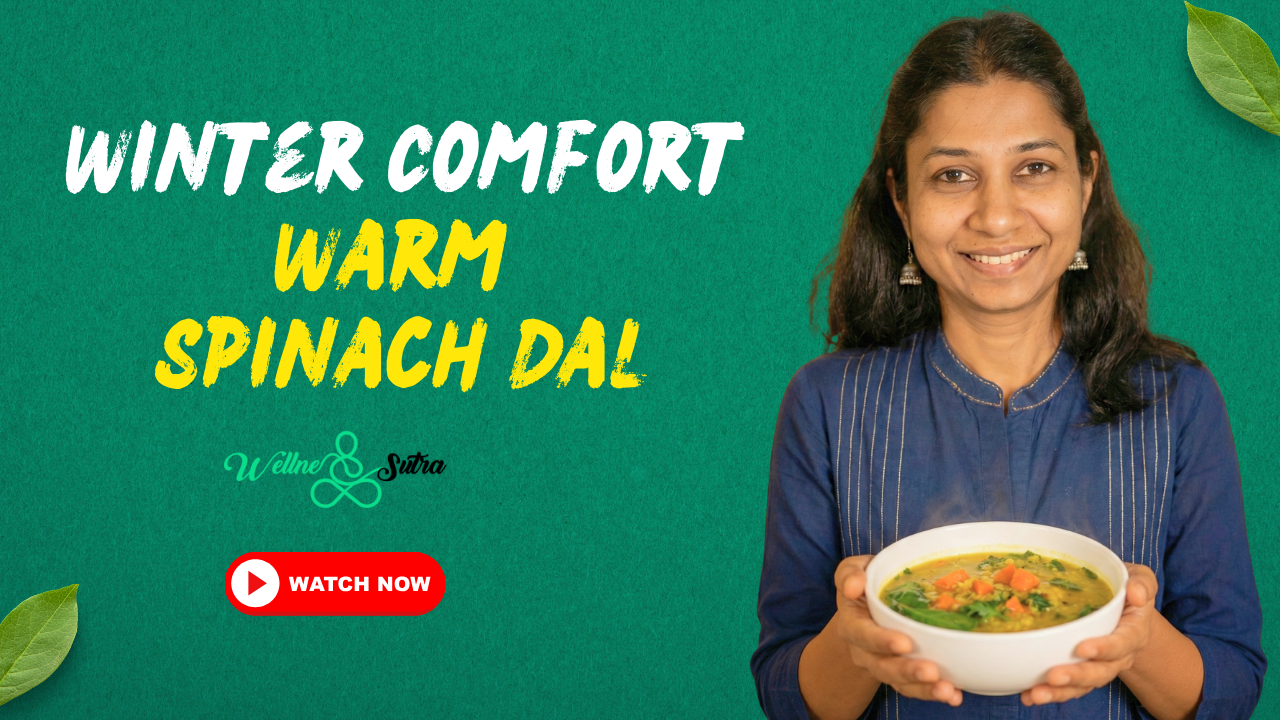
Winter is the season when our bodies naturally crave warmth, nourishment, and grounding foods. According to Ayurveda, this is also the time when our digestive fire (Agni) is strongest. As a result, we are able to digest foods that are slightly heavier yet deeply nourishing.
One such dish is Spinach Dal—a simple lentil soup prepared with warming spices like ginger and garlic and balanced with fresh spinach and tomatoes. Not only is this dish comforting, but it is also easy to digest and suitable for everyday meals, especially during colder months.
Why Spinach Dal Is Ideal for Winter
During winter, digestion naturally improves, which means the body can handle cooked greens and lentils more efficiently. For this reason, spinach dal becomes an excellent seasonal choice.
When spinach is cooked properly, it transforms from heavy to light and nourishing. Additionally, the use of warming spices supports digestive strength and helps prevent bloating. Because of this, spinach dal is both satisfying and balancing.
This dish supports:
Firstly, healthy digestion and gut balance
Secondly, sustained energy without heaviness
Moreover, warmth and nourishment during winter
Finally, a balanced plant-based diet
What Makes This Dish Ayurvedic
Ayurveda emphasizes not only what we eat, but also how we prepare food.
For example, lentils provide grounding plant-based protein, while ginger and garlic gently stimulate digestion. Meanwhile, spinach, when cooked, becomes easier to digest and more nourishing. In addition, ghee or olive oil helps deliver nutrients deeper into the tissues.
Together, these ingredients create a meal that is balanced, warming, and supportive of overall health.
Spinach Dal Recipe
Ingredients
1 cup yellow moong dal or red lentils (washed and soaked 20–30 minutes)
2 cups water
1–1½ cups fresh spinach, finely chopped
2 medium tomatoes, finely chopped
1 teaspoon fresh ginger, grated
2 cloves garlic, finely chopped
½ teaspoon turmeric powder
½ teaspoon cumin seeds
Salt to taste
1 teaspoon ghee or olive oil
Optional: a pinch of black pepper or cumin powder
Method
1. Cook the Dal
First, add the soaked dal, water, turmeric, and salt to a pot or pressure cooker.
Then, cook until the dal becomes soft and easily mashable.
2. Prepare the Tempering
Meanwhile, heat ghee or olive oil in a pan.
Once hot, add cumin seeds and allow them to crackle gently.
Next, add ginger and garlic and sauté lightly until aromatic, being careful not to brown them.
3. Add Tomatoes
After that, add the chopped tomatoes and cook until they soften and become slightly mushy.
4. Add Spinach
At this stage, add the spinach and cook for 1–2 minutes until just wilted.
5. Combine
Now, add the cooked dal to the pan.
Then, mix well and allow it to simmer for about five minutes, adjusting the water for your preferred consistency.
6. Finish
Finally, add a pinch of black pepper if desired and serve warm.
How to Enjoy This Dal
Spinach dal can be enjoyed in many ways. For instance, it pairs beautifully with rice or quinoa. Alternatively, it can be served with warm flatbread or enjoyed on its own as a nourishing soup.
In any case, it functions as a complete meal, offering protein, vegetables, healthy fats, and digestive spices.
Ultimately, winter encourages us to slow down and nourish ourselves deeply. By choosing warm, mindful meals like spinach dal, we support digestion, balance, and long-term health.
Above all, remember that in Ayurveda, food is not just nourishment—it is medicine.
Namaste 🌿